
NOT A DOCTOR.
STILL THE
Expert.
I’ve spent more than two decades in women’s hormones, with more than 16 years in clinical practice. I see patients, lead a clinical team, educate clinicians, speak about hormone care, troubleshoot the cases that don’t follow the textbook, and spend a slightly ridiculous amount of time reading the research behind all of it.
I’ve also spent those years watching women get told their symptoms are stress, age, lifestyle, or something they just need to learn to live with.
I’m not particularly good at accepting that as an answer when the clinical picture says we should be looking closer.
That’s how Fix What They Missed came to exist.
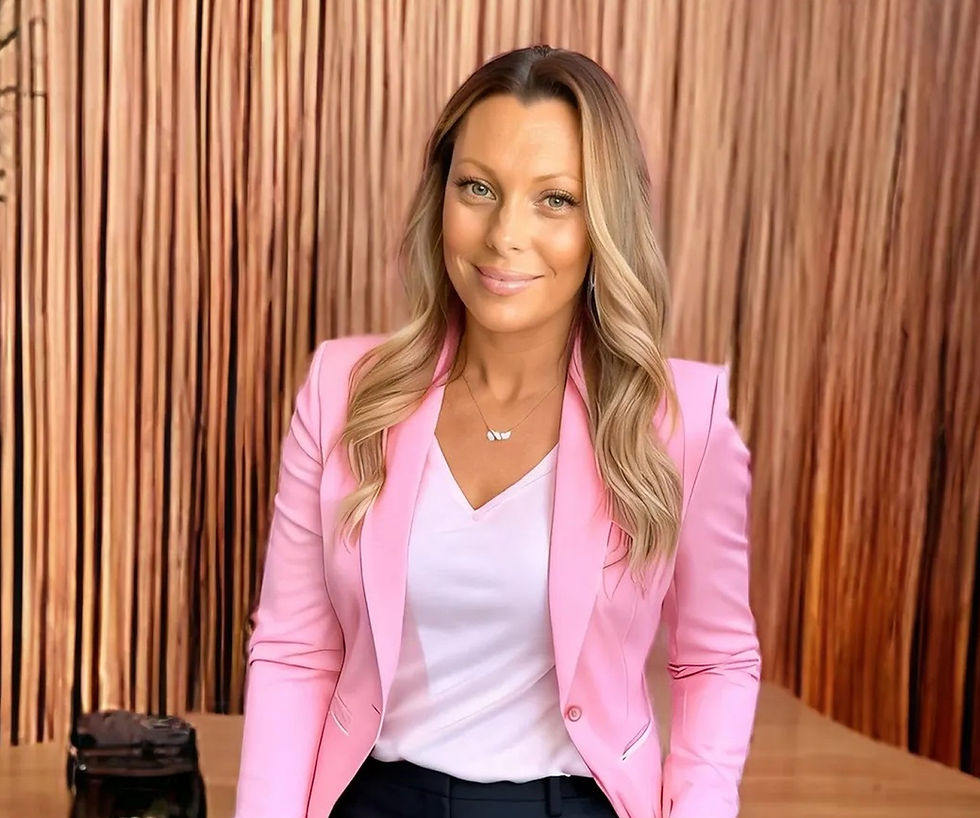

This work started long before menopause became a trend.
Women’s hormones are having a moment online. My career in them started more than 20 years ago.
I’ve watched the conversation change enormously during that time. Women are asking better questions, menopause is finally being discussed openly, and research that should have received more attention years ago is getting another look.
But there is still a lot we get wrong. I call out bad science when I see it, challenge conclusions that don’t match the research behind them, and have very little patience for women being handed a surface-level explanation when there is clearly more to investigate.
I’m not interested in being controversial for the sake of it. I’m interested in getting the science right.
20+ YEARS
IN HORMONE
THERAPY
16+ YEARS IN CLINICAL PRACTICE
CLINICAL TEAM LEAD
CLINICIAN EDUCATOR
ACCESS IS IMPROVING.
TRAINING STILL Matters


Women finally have more access to hormone care. That’s progress. But access is a pretty small crumb when women have spent decades asking for the whole cookie jar.
Being able to prescribe hormones is not the same as being deeply trained in hormone therapy. A certificate or exam doesn’t tell you how much time someone has spent learning hormone physiology, dosing, formulations, monitoring, evidence interpretation or what to do when a case doesn’t fit neatly into a protocol.
My training has been hands-on, advanced and ongoing. It includes an in-clinic preceptorship, Levels I through IV of Worldlink Medical CME training, continued education in women’s health and menopause, and more than 16 years of clinical practice.
I’m glad women have more options than they did before, but more access shouldn’t mean lowering the bar for expertise.
Women deserve the whole cookie jar: access, experience and someone who actually knows how to use the tools available to them.


Thyroid & Complex Hormone Cases
Thyroid disease, Hashimoto’s, hormone sensitivity, autoimmune overlap and presentations where several things may be happening at once.
Bone, Cardiovascular & Metabolic Health
Looking beyond symptom relief to the broader role hormones can play across bone, cardiovascular and metabolic health.
I look at the stuff that doesn’t fit neatly into one box.
Hormones don’t operate independently from the rest of your body, which is why my work has never been limited to hot flashes and periods. My clinical focus includes:
Sexual &
Urogenital Health
GSM, vulvovaginal hormone care, desire, arousal, pain and the broader relationship between hormones and sexual health.
Hormone
Therapy
Estradiol, progesterone, testosterone and DHEA, including dosing, monitoring, response and the differences that matter between therapies.
Menopause &
Perimenopause
Hormonal changes before, during and after menopause, including the symptoms and longer-term health considerations that can come with them.
Antidepressants, sleeping medications and supplement stacks may absolutely have their place. But when they become the answer before anyone has properly asked why a woman suddenly can’t sleep, can’t think clearly, has lost her sex drive, feels exhausted, or no longer feels like herself, we may be treating the symptom before we’ve properly assessed what’s driving it.
Hormones are part of that picture. Thyroid is part of that picture. So are sexual health, metabolism, autoimmune overlap and the other systems influencing how you feel. Your body isn’t separating them into neat little categories, and neither should we.
That’s why I look at the clinical picture as a whole. Symptoms, labs, history, physiology and response to treatment all give us information. The interesting part is figuring out how those pieces fit together.
I'm not here for
COOKIE CUTTER PROTOCOLS.
My mission is pretty simple:
look deeper, get the science right, and stop treating women like a collection of unrelated symptoms.
I’m not here for cookie-cutter protocols or symptom management for the sake of symptom management.



Holly Warner Health is my multidisciplinary, hormone-focused medical practice. I lead the clinical team and work collaboratively with nurse practitioners and physicians so that our patients benefit from different professional scopes without their care becoming a collection of disconnected opinions.
My role includes clinical oversight, chart review, lab interpretation, treatment strategy and case-based guidance. Our nurse practitioners and physicians provide prescribing care within their respective scopes of practice.
The important part is that we are working from the same clinical picture.
When something isn’t responding the way we expected, we look again. When labs, symptoms or other information change, the clinical strategy can change with them. I don’t believe a patient should be squeezed into a protocol simply because that protocol worked for the person before her.
Collaborative care should mean more clinical perspective, not more fragmentation.

THE MEDICAL PRACTICE BEHIND
My Work
Holly Warner Health
Women have spent decades fighting for better access to hormone care, and we’re finally starting to see that change. More clinicians are prescribing. More practices are opening. More women are being offered options they couldn’t access even a few years ago.
That's absolutely progress.
But access to hormone therapy and expertise in hormone therapy are not the same thing.
A certificate or an exam can show that someone has learned a set of information. It doesn’t tell you how deeply they’ve studied hormone physiology, dosing, monitoring, formulation, evidence interpretation, or what to do when the person sitting in front of them doesn’t respond the way the protocol said they should.
My training has been hands-on, advanced and ongoing. It includes an in-clinic preceptorship in bioidentical hormone replacement therapy under Dr. Konigsberg in Toronto, Levels I through IV of advanced Worldlink Medical CME training, and continued education in women’s health and menopause, including WHAM 2026.
Then there are more than 16 years of clinical practice behind it.
I’m thrilled women finally have more access. I also think they deserve to know how much training sits behind the person guiding their care.
READY TO WORK WITH Me?
I’m looking for answers about my own health.
Start with a 15-minute clarity call. Tell me what’s going on, what you’ve already tried and what you’re looking for. We’ll figure out whether a deeper clinical assessment makes sense.
I want to dig into
the research.
Read my latest hormone education, clinical commentary and research breakdowns, where I take a closer look at the studies, the headlines, the gaps in the conversation, and what the evidence actually means in real life.
COMING SOON
I want to do some homework first.
Dig into research breakdowns and practical education on hormones, menopause, thyroid health, sexual health and the science behind the conversations women are having every day.